Arranging now
For urgent help after a death, call our after-hours line at any hour. We will explain the next steps and timing, and coordinate with your funeral director or discuss your arrangements with you.
Planning ahead
Come and walk the garden, pick the spot you would like, and reserve it. We will write down your wishes and keep them on file for your family.
Embalming agents and other treatments intended to artificially preserve remains are not permitted.
Any container of wood, wicker, willow, bamboo, cardboard or natural fibre is welcome. Concrete and metal vaults and grave liners are not permitted, and no manufacturer, vendor or style is required.
The grave is dug professionally with hand tools before you arrive. Families are welcome to take part in closing it when conditions safely permit. Because no vault is used, the ground settles naturally over time.
The garden takes the Green Burial Council’s hybrid-cemetery standards as its technical benchmark, and its mission from its namesake, Laudato Si’, the landmark encyclical on environmental stewardship as a matter of social justice.
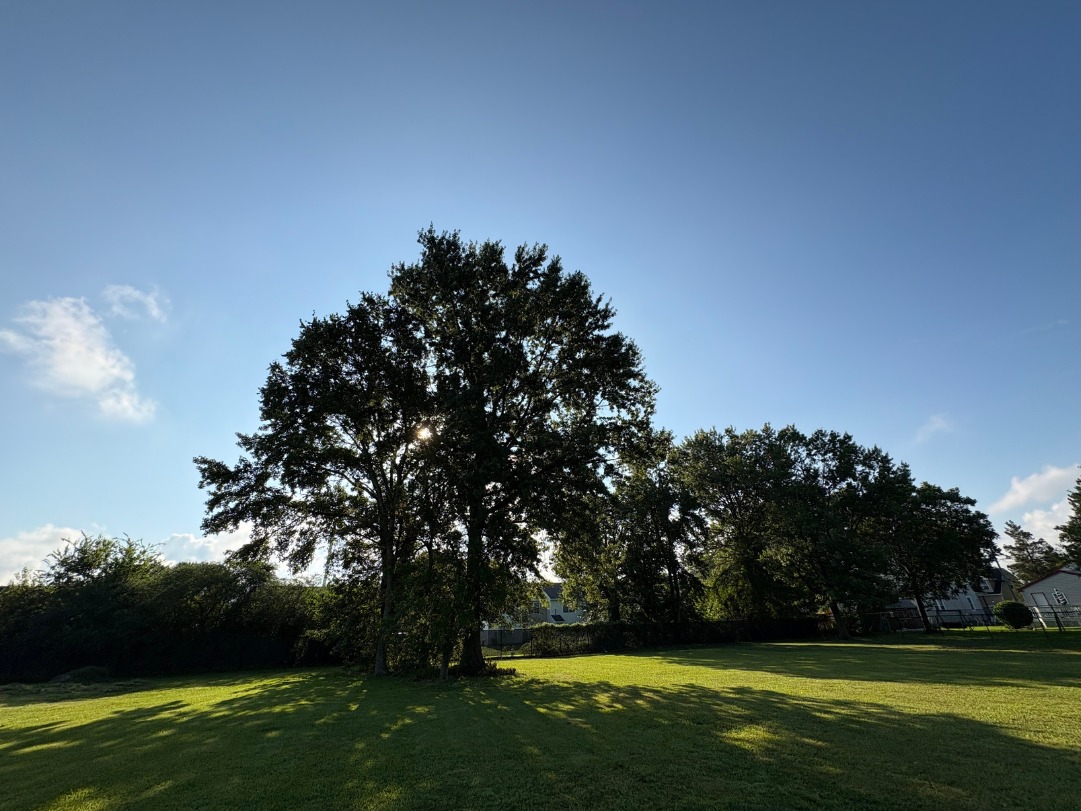
Before a single space is sold, the whole area is measured, mapped and marked by survey. Graves are set out under the drip lines of mature oak, gum and hickory, with a buffer held clear along the boundary. Every location appears in our searchable database and in community resources such as Find a Grave, so no intrusive marking is needed to find a grave again.
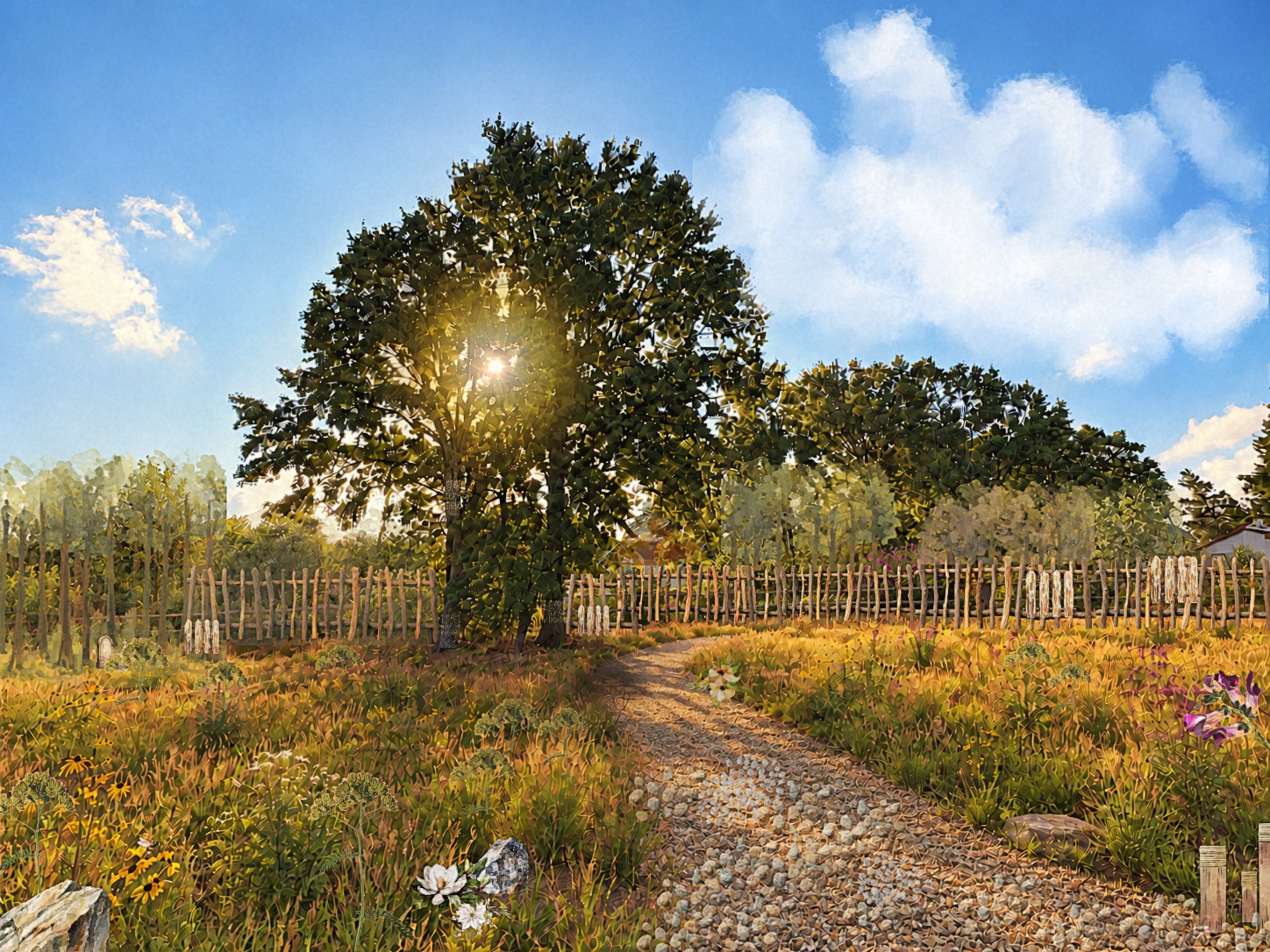
Native plants are the governing landscape standard, chosen for the soil, drainage and sunlight of the coastal plain. The planting below is planned rather than in the ground; nothing is planted that would impose itself on the site.
Volunteers wanted · November 2026
This is a preliminary list. Final selection, placement and installation remain under cemetery direction. Appropriate non-invasive alternatives may be used where site conditions warrant.
There is no form to fill in and no package to choose from. You come in, tell us your story, and we work with you from there.
Call or come in. Tell us about the person, what mattered to them, and what you hope for. There is no rush and nothing to decide in the first conversation.
We walk the garden with you and help you choose the place. If you are planning ahead, we write down your wishes and keep them on file for your family.
We work with your funeral home, or guide you through what is needed if you are arranging things yourselves. The grave is dug by hand before the day.
The service is yours to shape, with your own clergy or celebrant. Families who wish may help close the grave, and we will be beside you.
The garden is open from sunrise to sunset, every day. We tend the ground as it settles and care for the planting, so it is always ready for a visit.
One rule governs every option: natural materials only, nothing chemically treated, nothing that will outlast the ground it sits in. Within that rule, the choice is yours.
Any container made from natural materials is welcome. No concrete or metal vaults, no grave liners, no metal fittings or varnish.
Cremated remains are interred in a biodegradable container. Scattering is not permitted in the garden.
A biodegradable carrying board or similar support may be required for a shroud burial where staff judge it necessary for safe and dignified handling. Unusual containers are best confirmed with cemetery staff ahead of the interment. Memorial and planting charges are held in the cemetery’s separate price schedules.
Encouraged, and chosen from stone rather than cut to a pattern.
Permitted throughout the garden.
Permitted. No concrete foundation is poured, so size is limited for safety.
Permitted in this section.
Never required. The grave is mapped, so it can always be found.
The choice of grave marker is a deeply personal part of the relationship between the deceased and their loved ones. Memorials should complement the natural character of the garden, and remain subject to cemetery approval of placement, material, size and installation.
Open and close fee included
$6,050
The fee covers the grave space and the cemetery’s own work: the grave dug by hand, the interment, and closing by hand. Containers, shrouds and memorials are chosen separately.
Every green burial space is bespoke, prepared to suit the method of interment. Each plot measures 5 by 10 feet.
Terms
Plans are arranged privately, with no interest and no credit check. A visit costs nothing and commits you to nothing.
Embalming and burial vaults are not permitted. Fees for a funeral home, celebrant or transportation are paid to those providers directly.
Anything not answered here, ask us directly at 757-627-2874.
No. A dignified resting place is a basic, universal human right. There are no demographic, faith or community requirements that would prevent anyone from coming into our care.
Yes. Guidance confirms that full green burial, within the standards stipulated by the Green Burial Council, is fully compliant with teaching on the disposition of human remains, and this tradition has been a nationwide leader in expanding access to natural burial.
Burying the dead is one of the corporal works of mercy, and the Church has always preferred burial of the body, which is honoured as a temple of the Holy Spirit and awaits the resurrection. A simple grave, without embalming or a vault, reflects the words of the Ash Wednesday liturgy: remember that you are dust, and to dust you shall return. Cremated remains are welcome too, kept together and laid to rest in consecrated ground, as the Church asks.
Laudato si’, mi’ Signore, “Praise be to you, my Lord,” is the refrain of the Canticle of the Creatures by Saint Francis of Assisi. Pope Francis took it as the title of his 2015 encyclical on care for our common home, which asks us to see the earth as a gift entrusted to every generation, and to care for creation and for the poor together.
The garden takes the name as its mission: a burial that returns the body gently to the earth, native trees and meadow planted in its place, and a dignified resting place within reach of every family.
Yes. A shroud must be made from natural, biodegradable material and allow the deceased to be handled safely and reverently. A biodegradable carrying board or similar support may be required where staff judge it necessary.
Yes, in a biodegradable container or another manner approved by the cemetery. Scattering is not permitted within the garden at this time.
Yes. Because no vault or liner is used, families should expect the grave and surrounding soil to settle naturally over time. Grading and reseeding are handled by cemetery staff.
We ask that families request permission before bringing plants from outside the cemetery. No part of the garden should impose itself on the environment, which calls for careful curation of all flowers, grasses and plant life.
The entire area was measured, mapped and marked before any plot was sold. Locations appear in our searchable database and in community resources such as Find a Grave.
Visits with one of us are arranged by telephone or email, and are unhurried: an hour in the garden, no obligation of any kind. If you are arranging a burial now, call and we will tell you what is needed and what can wait.
757-627-2874
All Saints Cemetery
2701 Elm Avenue, Portsmouth, Virginia 23704
Call the office
Monday to Thursday, 8:00 am to 4:00 pm. Friday, 8:00 am to 12:00 pm.
Call 757-627-2874After hours
For a death that has just occurred, call 757-288-8925 at any hour.
Laudato Si’ Garden lies within All Saints Cemetery, off Elm Avenue near Portsmouth Boulevard. The grounds are open to visitors every day. Because we also conduct funerals on site, visits with one of us and all arrangements are made by telephone or email.
Garden updates and green burial information: Follow Laudato Si’ Garden on Facebook.